Hardanger Plateau Cabin Permits Sell Out by May While Bergsdalen Huts Stay Empty

Every spring, thousands of hikers log into the Den Norske Turistforening (DNT) booking portal at exactly 9 a.m. on the first Monday of February. By lunchtime, the most popular cabins on the Hardanger Plateau are fully booked for July. By May, the entire plateau's permit allocation is gone. Meanwhile, a two-hour drive west, the Bergsdalen valley—run by the same DNT system—has empty bunks all summer. The same country, membership, and booking website, yet the difference is geography, marketing, and a quiet truth that Norwegian locals have known for decades: not all valleys are created equal, and the ones that influencers ignore are often the best.
Norway's Cabin Paradox: Hardanger Sells Out, Bergsdalen Waits
The Hardanger Plateau is Norway's largest mountain plateau, an Arctic landscape of glaciers, reindeer herds, and the famous Trolltunga cliff. It draws crowds from around the world. The DNT operates roughly two dozen staffed and self-service cabins there, and every summer the demand exceeds supply. Permits for the most popular cabins—like the historic Tyssevassbu or the remote Litlos—are allocated through a lottery and advance booking system. By mid-May, the online calendar shows red blocks for every weekend in July and August.
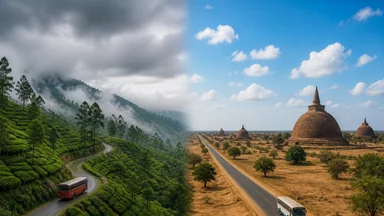
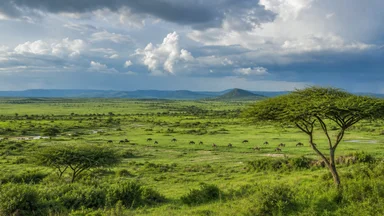
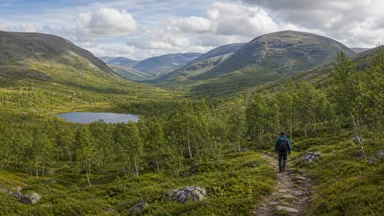
Bergsdalen, by contrast, is a green valley system east of Bergen. It lacks a single Instagram-famous rock formation. Its trails wind through birch forest and past small lakes, with views of rounded mountains rather than vertical cliffs. The DNT cabins here—such as Bergsdalsstølen and Krossfonn—rarely fill up, even on peak summer weekends. On a Tuesday in late July, you can often walk in and find a bed without a reservation.
This paradox is not a secret to locals. Norwegian hikers who grew up in Bergen know that Bergsdalen is a reliable backup when the Hardanger lottery fails them. But the international travel media rarely mentions it. Influencer maps of Norway highlight Trolltunga, Preikestolen, and the Lofoten Islands. Bergsdalen does not appear in the glossy roundups. So the crowds concentrate, and the quiet valleys stay quiet.
The DNT system itself is neutral. It does not promote one valley over another. But the algorithm of social media and guidebook publishing creates a self-reinforcing cycle: the more people post about Hardanger, the more others want to go, and the more permits become scarce. Meanwhile, Bergsdalen's empty bunkrooms are available for anyone willing to look at a map with a critical eye.
How the DNT Cabin Permit System Actually Works
The Den Norske Turistforening runs more than 550 cabins across Norway, from the Arctic archipelago of Svalbard to the southern forests. The system is built on a membership model: anyone can join for roughly 500–700 NOK per year (around US$ 50–70), and members pay reduced rates for overnight stays. Non-members can also book but pay a premium of roughly 30–50% more per night.
Cabins fall into three categories. Staffed cabins have a warden who serves meals and provides information; they require advance booking and cost roughly 400–600 NOK per night for members. Self-service cabins are unlocked with a DNT key (available for purchase or rental) and have basic cooking facilities; they cost around 200–400 NOK. Unmanned cabins have no key box, no staff, and no reservation system—you simply show up, sign the guestbook, and leave a fee in an envelope. These are the cheapest, often 100–200 NOK, and they never sell out because there is no cap.
Booking for staffed and self-service cabins opens in early February for the summer season. The most popular cabins—those on the Hardanger Plateau, in Jotunheimen, and along the Besseggen ridge—fill within hours. The DNT website uses a real-time availability calendar, and cancellations do happen, but they are snapped up quickly. For the truly popular cabins, the only reliable strategy is to book as soon as the window opens, or to target midweek stays in June or late August.
Off-season slots are a different story. From September to May, many staffed cabins close or reduce service, but self-service and unmanned cabins remain open. The weather is harsher, and daylight is shorter, but the solitude is considerable. A hiker who shows up at a Hardanger self-service cabin in mid-September will almost certainly find an empty bunkroom. The permit scarcity is a summer phenomenon, driven by peak-season demand and the limited number of staffed cabins.
One crucial detail that first-time visitors often miss: unmanned cabins do not require any booking at all. You just walk in. The DNT publishes a list of these cabins on its website, and they are scattered across the country, including in Bergsdalen. For a hiker willing to carry a tent as backup and accept basic conditions—no gas, no electricity, no warden—the permit game is entirely optional.
Hardanger's Geography Breeds Scarcity
The Hardanger Plateau sits at an average elevation of roughly 1,100 meters, a treeless expanse of rock, snow, and shallow lakes. It is one of the few places in mainland Europe where you can walk for days without seeing a road or a settlement. The landscape is dramatic, with the Hardangerjøkulen glacier dominating the eastern edge and the deep fjord of Sørfjorden cutting into the western side. This combination of accessibility from Bergen and Oslo and raw Arctic scenery makes it a magnet.
Trolltunga, the cliff that juts out horizontally over Lake Ringedalsvatnet, is the most famous single landmark. In July, the trailhead parking lot fills by 6 a.m., and the queue for the photo spot can exceed an hour. The DNT cabin at Tyssevassbu, which sits on the approach trail, is booked solid weeks in advance. The permit cap for the plateau is not arbitrary—it is based on the limited capacity of the cabins and the environmental sensitivity of the terrain. The DNT caps the number of overnight visitors to prevent erosion and protect reindeer calving grounds.
The bus from Oslo to the Hardanger plateau departs at 5:30 a.m. daily in summer, a schedule that has become a ritual for hikers who miss the early booking window. They ride the bus in hopes of a cancellation or a no-show. Some succeed, but many end up sleeping in the tent they brought as backup. Local hikers from Bergen and Oslo have learned to avoid mid-July entirely. They go in late June, when the snow is still patchy but the crowds are thinner, or in late August, when the berries are ripe and the reindeer are moving.
The scarcity is not just about cabins. The plateau's trails are narrow, and in peak season you can meet a group every few hundred meters. The experience of solitude that many seek is replaced by a social trail of backpacks and trekking poles. The DNT does its best to manage the flow, but the geography of the plateau funnels hikers along a few main routes. There is no way to spread out without building more cabins, which the DNT has no plans to do.
Bergsdalen's Empty Bunkrooms Tell a Different Story
Bergsdalen lies roughly 40 kilometers east of Bergen, a valley system that runs north-south between the E16 highway and the Voss railway line. The terrain is gentler than Hardanger: forested lower slopes, open meadows at higher elevations, and rounded summits that rarely exceed 1,200 meters. There are no glaciers, no fjord views, no cliffs that make you gasp. What it offers is quiet walking, reliable water sources, and a network of DNT cabins that rarely see a full house.
The DNT cabin at Bergsdalsstølen, a self-service hut with 20 bunks, sits at the head of the valley. On a Saturday in late July, you might find four or five other hikers. The guestbook shows entries from a mix of Bergen locals, German families, and the occasional Dutch couple. No one is queuing for a photo. The silence is broken only by the wind and the occasional reindeer grunt. Wild reindeer are common here, and without the crowds of Hardanger, you can watch them for minutes before they move on.
Why does Bergsdalen stay empty? Partly because it lacks a single iconic landmark. There is no Trolltunga, no Preikestolen, no Besseggen ridge. The valley is beautiful in a quiet, unassuming way, but it does not produce the kind of image that drives social media shares. The rain shadow of the coastal mountains also plays a role: Bergsdalen gets more rain than Hardanger, and the weather can be damp and grey for days at a time. For the fair-weather hiker, that is a deterrent. For the experienced trekker, it is an advantage.
The DNT's own booking data shows that Bergsdalen cabins have an average occupancy rate of roughly 30% during July, compared to Hardanger's 95%+. The same membership, the same booking system, the same price. But the valley's relative anonymity means that a weekend walker can always find a bed. The local hiking community in Bergen knows this, and they use Bergsdalen as a training ground for longer trips. They also know that the best strategy is to skip the permit entirely and head for the unmanned cabins, which are never full.
What Guides and Weather Forecasts Don't Say
The Norwegian Meteorological Institute's website yr.no is a reliable source for weather forecasts in Norway. It gives hourly predictions for temperature, wind, and precipitation down to the square kilometer. What it does not tell you is how many other hikers are on the trail. A forecast of 15°C and light rain might keep the crowds away from Hardanger, but it will also keep them away from Bergsdalen. The data is the same, but the human behavior is different.
Guidebooks like the popular "Trekking in Norway" series focus on named peaks and classic routes. They describe the Hardanger Plateau in detail, with GPS coordinates, water sources, and emergency contacts. Bergsdalen gets a paragraph or two. The same pattern holds for online resources: the UT.no app, run by the DNT, shows live hut occupancy for staffed cabins, but the self-service and unmanned cabins are not tracked in real time. The app tells you if a cabin has beds available, but not how many people are actually there.
Local Facebook groups are where the real information lives. Groups like "Bergen Turgruppe" or "DNT Hytter" post updates about cabin conditions, trail closures, and—crucially—which valleys are quiet. A post in early July might say, "Hardanger full, heading to Bergsdalen instead. Anyone been there this week?" The replies are practical: water levels, snow patches, which cabin has a working stove. This is the information that guidebooks and weather apps cannot provide.
The UT.no app does have a feature that shows the number of booked beds in staffed cabins, updated every few hours. For self-service cabins, there is no live data, but the app shows the total capacity and the number of reservations made. A savvy hiker can check this before leaving home. If a 20-bed cabin shows 2 reservations for the night, the odds of solitude are high. This is the kind of practical tip that rarely makes it into glossy travel features.
Pricing and Timing: The Practical Gap
The cost difference between Hardanger and Bergsdalen is negligible for the same cabin category. A night in a self-service DNT cabin costs roughly 200–400 NOK for members, regardless of location. Staffed cabins on the Hardanger Plateau, such as Tyssevassbu or Litlos, can reach 600 NOK per night for non-members, but members pay closer to 400 NOK. Bergsdalen's staffed cabins, where they exist, are priced identically. The difference is not in the rate but in the booking fee: some popular cabins add a small surcharge, but it rarely exceeds 50 NOK.
The real gap is timing. A midweek stay in June or late August cuts competition dramatically. In 2024, a hiker who booked a Tuesday night at Bergsdalsstølen in late August paid 250 NOK and had the entire cabin to themselves. The same night at a Hardanger self-service cabin would have cost the same, but the cabin was fully booked three months earlier. The sweet spot for both valleys is the shoulder season: late May to mid-June, when the snow is melting but the school holidays have not started, and late August to mid-September, when the crowds have gone home.
Midweek stays are even better. Most DNT cabins require a minimum two-night stay on weekends during peak season, but midweek bookings are flexible. A hiker who can take a Tuesday and Wednesday off work can avoid the weekend rush entirely. The DNT website shows availability by date, and the difference between a Friday and a Tuesday is clear: red blocks on Friday, green blocks on Tuesday.
The permit system for the Hardanger Plateau adds another layer. Some cabins require a separate permit in addition to the booking, and the permits are limited. The DNT issues them on a first-come, first-served basis, and they are tied to specific dates. If you miss the permit window, you cannot stay in those cabins even if a bed appears to be available. Bergsdalen has no such permit system. You simply book the cabin or walk into an unmanned hut.
For budget-conscious travelers, the unmanned cabins are the best deal. They cost roughly 100–200 NOK per night, and you pay by putting cash in an envelope. No booking, no key, no permit. The catch is that they have no gas, no electricity, and no warden. You must carry a stove, a sleeping bag, and a first-aid kit. But for the price of a coffee in Oslo, you can sleep in a remote valley with no one else around.
How to Walk Bergsdalen Without a Permit Scramble
The simplest way to avoid the permit scramble is to skip it entirely. Bergsdalen's unmanned cabins—such as the small hut at Krossfonn—require no reservation. You can walk in anytime, sign the guestbook, and sleep for 150 NOK. The DNT publishes a list of unmanned cabins on its website, and they are scattered across the valley. The catch is that you must carry a tent as backup, because if the cabin is full (unlikely but possible), you need a Plan B.
Getting to Bergsdalen is straightforward. The Bergen–Voss train stops at stations like Dale and Stanghelle, both within walking distance of the valley trails. The train runs roughly every hour, and the journey from Bergen takes about 40 minutes. From Oslo, take the train to Bergen (roughly 6.5 hours) and then the local train. Alternatively, the bus from Oslo to Bergen stops at the E16 highway, from which you can hike into the valley. A hiker leaving Oslo by 7 a.m. can be on the trail by noon.
Once in the valley, the DNT trail network is well-marked with red T's. The most popular loop is a two-day circuit from Bergsdalsstølen to Krossfonn and back, covering roughly 20 kilometers with modest elevation gain. The trail passes through birch forest, across open heath, and along the edge of small lakes. Reindeer sightings are common, and the birdlife includes golden plovers and redwings. The terrain is gentle enough for a beginner but varied enough for an experienced hiker.
Packing for an unmanned cabin requires more gear than a staffed hut. You need a camping stove, fuel, a pot, a sleeping bag rated for freezing temperatures, and a headlamp. The cabin will have a wood stove and a supply of firewood, but no gas. Water is abundant from streams, but you should treat it with a filter or purification tablets. The DNT recommends carrying a first-aid kit, a map, and a fully charged phone with the UT.no app downloaded offline.
The experience of walking Bergsdalen without a permit is unlike the crowded Hardanger experience. You set your own pace, stop when you want, and sleep in a cabin that feels like your own. The silence at night is complete. In the morning, you wake to the sound of water and birds. There is no queue for the bathroom, no one asking about your itinerary. It is the kind of travel that does not generate Instagram likes but does generate memories. And that, perhaps, is the real paradox: the valleys that are easiest to access are often the hardest to enjoy, while the quiet ones are the ones that stay with you.