Khao Yai National Park Gate Turns Back Two-Wheelers Without Printed Pre-Booking Slip

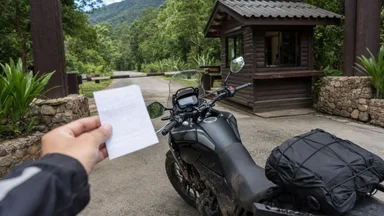
Many riders arriving at Khao Yai National Park's northern entrance are turned away because they lack a printed pre-booking slip. The parking lot outside the gate fills with rented motorbikes and bicycles each morning, but a surprising number of riders end up heading back to town empty-handed. The reason is a policy that catches first-time visitors off guard: the park requires a printed copy of the reservation confirmation for two-wheelers. Digital versions on phones are routinely rejected.
Park rangers at Khao Yai National Park reject motorcycles and bicycles whose riders show a digital confirmation on a phone instead of a printed slip. The rule applies year-round, though enforcement tightens during peak season and weekends. Visitors who arrive without the paper slip lose an hour or more riding back to Pak Chong to find a printer. This article explains the printed-slip requirement, offers a realistic three-day itinerary for travelers without a car, and details how to avoid gate refusal.
The Printed Slip That Decides Your Day
Khao Yai National Park, roughly a three-hour drive northeast of Bangkok, is one of Thailand's most visited protected areas. Its 2,168 square kilometers contain waterfalls, hiking trails, and wildlife including gibbons, elephants, and hornbills. But the park's popularity has led to strict entry controls, especially for two-wheelers.
Park rangers at the main gates — the northern entrance near Pak Chong and the southern entrance near Prachinburi — check every vehicle's reservation. For cars and vans, a digital confirmation on a phone is usually accepted. For motorcycles and bicycles, the rule is different: only a printed slip is valid. The slip must show the booking reference, entry date, vehicle type, and payment confirmation. Riders without it are asked to turn around.
The policy, according to park officials, is partly about safety. The winding mountain roads inside the park, especially the stretch from the northern gate to the visitor center, see frequent accidents involving two-wheelers. Requiring a printed slip ensures that riders have gone through the booking process and are aware of the park's rules. It also helps cap the number of two-wheelers on any given day, which reduces congestion at popular spots like Haew Suwat Waterfall and the hiking trails near the visitor center. The park limits two-wheelers to roughly 300 motorcycles and 100 bicycles per day during peak season, and the printed slip helps rangers verify slots quickly.
Some travelers argue that the rule is outdated. "Every other national park in Thailand accepts phone screenshots," one rider complained on a travel forum in late 2024. "Khao Yai is the only one that still demands paper." Others counter that the printed slip is a small hassle that keeps the park from being overrun. The debate continues, but the rule remains. Internal checkpoints also require the printed slip. About 5 kilometers inside the northern entrance, a second ranger booth checks vehicles for valid entry. Riders who passed the main gate with a digital copy may be stopped here and asked to produce the paper slip. If they cannot, they may be fined or asked to return to the gate. The fine is roughly 500 baht, though some riders report being let off with a warning on quiet days.
The rule has been in place since roughly 2019, when the park switched to an all-online booking system. Before that, tickets were sold at the gate. The change was intended to reduce queues and improve visitor management, but the printed-slip requirement for two-wheelers has been a persistent source of frustration. Park officials say they have no plans to change the rule, citing safety and efficiency.
Three Days in Khao Yai Without a Car
For travelers arriving by bus from Bangkok, a three-day visit to Khao Yai without a car is feasible but requires planning. Day one starts with a morning bus from Bangkok's Mo Chit station to Pak Chong, a town roughly 10 kilometers from the park's northern entrance. The journey takes roughly two and a half hours. From Pak Chong, a songthaew — a covered pickup truck used as a shared taxi — runs to the park gate for roughly 50 baht per person. But before heading up, the traveler must print the pre-booking slip.
Pak Chong has several internet shops near the bus station that offer printing for around 10 baht per page. Some guesthouses also print slips for a small fee, typically 20 to 50 baht. The slip should be printed in color if possible, as the barcode scans more reliably. Two copies are wise: one for the gate, one for internal checkpoints.
Day two: inside the park, the best option for a solo traveler without a car is to rent a bicycle from the visitor center. Bicycles are available for roughly 150 baht per day, though availability varies. Paved roads near the visitor center are manageable for most riders, but the hills can be strenuous. A better approach is to stick to short trails like the 1.5-kilometer nature trail near the visitor center, which passes a small stream and offers a chance to see hornbills in the canopy. For longer distances, joining a guided van tour from the visitor center is practical; these tours cost roughly 800 to 1,200 baht per person and cover Haew Suwat Waterfall, the park's most famous cascade, which appears in the film The Beach.
Day three: a morning hike on the 3-kilometer trail to Kong Kaew Waterfall, then a songthaew back to Pak Chong for an afternoon bus to Bangkok. This pace allows for wildlife watching at dawn and avoids the midday heat. The total budget for three days, not including accommodation, is roughly 2,000 to 3,000 baht.
Seven Days: Adding the Eastern Wildlife Loop
For travelers with a week, a longer stay in Khao Yai allows exploration of the eastern zone, which sees far fewer visitors than the northern area near the visitor center. Days four and five can be spent at a ranger station near the eastern entrance, where basic accommodations are available for roughly 600 baht per night. The eastern zone has several trails that wind through dry evergreen forest and past salt licks frequented by deer and wild boar. Early morning wildlife watching here is excellent; gibbons call from the canopy just after dawn, and hornbills are common.
Day six: a hike to Heo Suwat Waterfall, which is accessible from the eastern side via a 4-kilometer trail. The trail is moderately steep and takes roughly two hours each way. The waterfall plunges into a deep pool that is safe for swimming in the dry season, though currents can be strong after rain. The site is famous from the film The Beach, and on weekends it can be crowded with tour groups arriving by van. Starting early — by 7 a.m. — avoids the crowds.
Day seven: return to Pak Chong via the southern gate, which requires a longer drive but avoids backtracking. The southern route passes through farmland and small villages, offering a different perspective on the region. Alternatively, a direct bus from the park's southern exit to Bangkok is available, though schedules are irregular. The park's main exit is the northern gate, so the traveler should confirm bus times in advance.
Longer stays require re-printing the slip if the traveler exits and re-enters the park. For a seven-day trip, a single printed slip may suffice if the traveler does not leave the park. But if a supply run to Pak Chong is necessary, a second printout is needed. The ranger stations inside the park cannot always print, so planning is essential.
The Off-Season Loophole That Closes Fast
Travelers who visit during the green season — roughly May to October — often find the printed-slip rule enforced more leniently. On very quiet days, when the parking lot is half-empty, some rangers may wave a rider through with a digital confirmation on a phone. But this is not guaranteed, and the loophole closes fast. After around 9 a.m., when the morning rush begins, rangers tend to enforce the rule strictly regardless of the season.
The green season also brings challenges. Monsoon rains make some trails slippery or closed entirely. The popular 8-kilometer trail to Heo Suwat Waterfall is often muddy and slow going. Leeches may be present; hikers should wear long socks and insect repellent. Wildlife viewing, however, can be excellent, as animals are less skittish in the rain and the forest is lush.
Last-minute walk-in entries — where a rider shows up without any booking — are almost always rejected, even during the green season. The online booking system must be used at least a day in advance. Same-day bookings are possible only if slots remain, but the system often shows zero availability for two-wheelers after 7 a.m. on weekends. Some travelers have reported success by refreshing the page repeatedly, but this is a gamble.
For those willing to risk it, arriving at the gate before 6 a.m. during the green season may yield a chance to enter without a printed slip. A few riders have reported that rangers at the northern entrance, when the queue is short, accept a phone screenshot and issue a handwritten receipt. But this is rare and depends on the individual ranger. Most travelers should not count on it.
How to Get the Slip Right Every Time
The surest way to avoid gate refusal is to book online through the park's booking system at least one day before the planned visit. For a step-by-step guide, see our article How to Book Khao Yai Online. The booking website is available in Thai and English, though the English version sometimes has glitches. Booking requires a passport number, vehicle details, and payment by credit card. The entry fee for a motorcycle is roughly 100 baht for a Thai national and 200 baht for a foreigner; for bicycles, the fee is 40 baht for Thais and 100 baht for foreigners. The system sends a confirmation email with a PDF attachment.
Print two copies of the PDF. One goes to the main gate; the other is kept as a backup for internal checkpoints. Laminating the slip or placing it in a clear plastic sleeve protects against rain, which is common even in the dry season. A PDF saved offline on a phone serves as a secondary backup, but it should not replace the paper copy. Some guesthouses in Pak Chong, especially those near the bus station, offer printing services for a small fee — typically 20 to 50 baht. A few even keep a printer at the front desk for this purpose.
For travelers staying inside the park, the slip must be presented each time they exit and re-enter the park. If the stay spans several days and the traveler plans to leave the park for supplies or a night out, a fresh printout may be needed. Some ranger stations inside the park can reprint slips for a fee of roughly 10 baht, but this is not guaranteed. Planning ahead is safer.
Another tip: book the vehicle type accurately. If the booking is for a bicycle but the rider arrives on a motorcycle, the slip is invalid. Similarly, a slip for a car cannot be used for a motorcycle. The system records the license plate number, though rangers rarely check it against the actual vehicle. Still, the vehicle type must match.
What Happens When You Forget the Slip
The most common consequence of forgetting the printed slip is being sent back to Pak Chong to print it. The round trip from the northern gate to Pak Chong and back takes roughly 90 minutes, depending on traffic and the availability of a printer. Some travelers have reported that rangers allow them to rebook at the gate if the online quota for two-wheelers has not yet filled. This is more likely on weekdays during the green season, when the park is less busy. But on weekends and holidays, the quota may be exhausted by mid-morning, and no rebooking is possible.
If rebooking is allowed, the process involves logging onto the park's website on a smartphone, paying the fee again, and showing the new confirmation to the ranger. The ranger may then issue a handwritten slip. This is not a guaranteed workaround; some rangers refuse and send the rider away regardless. The better plan is to rent a car in Pak Chong for the day. Car rentals in town start at roughly 1,200 baht per day, plus fuel. This bypasses the two-wheeler rule entirely, as cars are allowed entry with a digital confirmation.
Another option: join a guided tour from Pak Chong. Several tour operators offer day trips into the park for roughly 1,500 baht per person, including transport, guide, and lunch. These tours usually have their own printed slips for the vehicle, so the traveler does not need to worry about the rule. This is a good backup for travelers who arrive in Pak Chong without a booking. The tour typically covers the main waterfalls and a short hike, and it returns to town by late afternoon.
Carry a printed slip, a plastic sleeve, and a backup plan to ensure entry. The printed-slip rule at Khao Yai is a small hurdle, but it can derail a day for the unprepared. The park itself is worth the extra effort. The waterfalls, the wildlife, the quiet trails — these remain the reasons travelers keep coming. The rule is not likely to change soon, so learning to work with it is the practical path.