Tbilisi Metro Credit Card Readers Accept Visa but Reject Mastercard at Most Stations

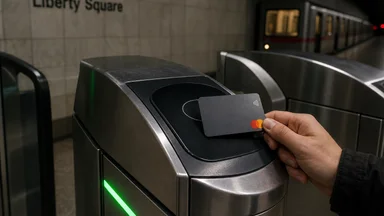
Standing at Liberty Square metro station in Tbilisi, I tapped my Mastercard against the turnstile reader. Nothing. I tried again, angling the card differently. The screen flashed red. The station attendant, a woman in a blue uniform, barely looked up from her phone before pointing at the cash booth. I joined a line of five people, all holding Mastercards. The same card had worked without issue at Tbilisi Airport Metro station an hour earlier. This split—Visa accepted, Mastercard rejected—defines the Tbilisi Metro experience for many visitors.
Mastercard Rejected at Station Turnstiles, Visa Accepted
The inconsistency is not a rumor or a one-off glitch. At least five downtown stations—including Liberty Square, Rustaveli, Marjanishvili, and Didube—routinely reject Mastercard contactless payments at the turnstile. Visa cards, by contrast, tap through on the same readers without trouble. Reports on travel forums and from local residents confirm the pattern: if you carry only a Mastercard, you will likely need cash or a reloadable Metromoney card.
The rejection is not universal. Some newer readers, particularly at stations renovated in the past few years, accept both networks. But the majority of turnstiles across the system's 23 stations appear to favor Visa. The Tbilisi Transport Company has not published an official list of card-accepting stations, leaving travelers to discover the limitation by trial and error.
The problem is most acute during peak hours—roughly 8–10 a.m. and 5–7 p.m.—when cash queues at ticket windows can stretch to ten or more people. Visa users tap and walk through in seconds. Mastercard users wait, adding 3–8 minutes per ride. For a short metro journey costing around 0.50–0.70 GEL (roughly US$0.18–0.25), the time penalty is disproportionate.
To understand the scale, consider a typical tourist itinerary. If you stay in a hotel near Rustaveli Avenue and plan to visit the Dry Bridge flea market, the Sameba Cathedral, and the Mtatsminda Park, you might take the metro four times in a day. Each time, if you're a Mastercard holder, you could spend up to 8 minutes in line. That's 32 minutes per day just waiting to buy tokens. Over a five-day trip, that's nearly three hours of your vacation lost to queuing. Meanwhile, a Visa user breezes through in seconds each time.
The problem is especially pronounced at stations with high tourist traffic. Liberty Square, for instance, serves the old town and is often crowded with visitors who don't have local cash. I've seen frustrated travelers try three or four different cards at the turnstile before giving up and joining the cash line. The station attendants, while generally helpful, are not empowered to override the system or offer alternative payment methods. Their typical advice is simply, "Use cash."
Why the Split Happens: Payment Terminal Generations
The root cause is a mismatch in terminal generations. Tbilisi Metro began rolling out contactless payment readers in 2019, installing units from Verifone at most stations. These older Verifone terminals were configured to process Visa payWave but not Mastercard PayPass. A second wave of installations, using Ingenico terminals, added Mastercard support, but the rollout was uneven.
As of late 2024, roughly 70% of station turnstiles reportedly carried Visa-only readers, according to estimates from local transit bloggers. The remaining 30%—mostly newer installations at stations like Tbilisi Airport and Varketili—accepted both networks. There is no public schedule for upgrading the older units. The Tbilisi Transport Company has cited budget constraints and supply chain delays for the slow progress.
The airport exception is instructive. Tbilisi Airport Metro station, opened in 2021 as part of a line extension, was fitted with Ingenico terminals from the start. It accepts Visa and Mastercard without issue. The contrast suggests that as stations are renovated, readers are replaced, but the downtown core remains stuck with the older equipment.
This generational split is not unique to Tbilisi. Transit agencies in Eastern Europe and the Caucasus have faced similar challenges when rolling out contactless payments. But few have maintained such a stark divide for so long. Mastercard users in Tbilisi often feel like second-class passengers, even though the network itself is capable.
There is a technical nuance worth understanding. The Verifone terminals used in the first wave are capable of supporting Mastercard PayPass, but the metro's payment processor—a company called TBC Pay—has not enabled it. The reason may be contractual: TBC Pay might have a preferential arrangement with Visa, or the cost of certification for Mastercard was deemed too high for the low transaction volume. This is common in smaller transit systems where the card schemes charge fees per terminal certification. The metro operator likely chose to certify only Visa initially to save costs, expecting Mastercard users to use cash. The problem is that this expectation never changed, and Mastercard users now face a persistent barrier.
How Locals and Tourists Navigate the Workaround
Cash remains the universal fallback. Every station has a ticket window that accepts Georgian lari notes and coins. Single-ride tokens cost roughly 0.50 GEL, and a reusable Metromoney card costs a 2 GEL deposit, refundable at major stations. Locals tend to top up their Metromoney cards with 10–20 GEL at a time, avoiding daily cash transactions.
For tourists, the best strategy is to carry small denominations: 1, 2, and 5 GEL notes. Station attendants rarely have change for large bills, and nearby ATMs often charge 2–4% fees for foreign cards. Currency exchange kiosks near metro stations can lose you 5–8% on the spread, so withdrawing lari from a bank ATM is usually cheaper.
If you have a Visa card, you can skip the queue entirely. Tap at the turnstile, and the fare is deducted automatically. Mastercard holders should buy a Metromoney card at the first opportunity—preferably at Tbilisi Airport Metro station, where the process is smooth and the attendant speaks some English. Load 10–20 GEL to cover several days of rides.
A small but growing number of stations now accept contactless payments via smartphone wallets (Apple Pay, Google Pay) even when the underlying card is Mastercard. The terminal reader interacts with the phone's NFC chip, which sometimes bypasses the network restriction. Results are inconsistent, but worth trying if you are stuck. I tested this at Marjanishvili station with an iPhone and a Mastercard from a European bank: it worked once, then failed the next day. So it's not reliable, but it's an option.
Another workaround is to use a prepaid travel card that runs on the Visa network. Many travelers carry a Visa-based card like Revolut or Wise for exactly this reason. If you have only Mastercard, consider opening a free Visa virtual card on your phone before the trip. Some digital banks issue instant virtual Visa cards that you can add to Apple Pay or Google Pay. This way, you can tap your phone at the turnstile and avoid the cash queue.
The Surprising Airport Exception and What It Means
Tbilisi Airport Metro station, located just outside the terminal building, is the most reliable place to use a Mastercard. The station opened in 2021 with all-new infrastructure, including Ingenico terminals that accept both Visa and Mastercard. Trains run every 8–12 minutes during the day, and the ride to downtown stations like Liberty Square takes roughly 20–25 minutes.
The airport exception is encouraging but also frustrating. It shows that the technology works and that the transit authority can implement universal acceptance when it chooses. The downtown stations, which handle far higher passenger volumes, remain stuck with older equipment. There is no official timeline for upgrading them, though local media reported in 2024 that a budget allocation for reader replacements had been delayed.
For travelers arriving by air, the obvious move is to use the airport metro station to buy a Metromoney card and load it with lari. That way, you have a working payment method before you reach the downtown turnstiles. Visa users can tap straight through, but Mastercard users should plan ahead.
The airport line also has a quirk: the station is not fully underground. It sits at ground level, with a covered walkway from the terminal. This design was chosen to reduce construction costs, but it also means the station is exposed to weather. In heavy rain, the ticket machine screens sometimes fog up, but the card readers remain functional.
One thing I noticed at the airport station: the ticket vending machines accept both cash and cards, and they work with Mastercard. So even if the turnstile rejects your Mastercard, you can use the vending machine to buy a single-ride token or top up a Metromoney card. This is not true at most downtown stations, where the vending machines are often out of order or only accept cash. The airport station's vending machines are newer and more reliable.
Budget Impact: When Card Rejection Costs You Time and Money
The time penalty of queuing for cash tickets adds up. If you take four metro rides per day, each requiring a 3–8 minute wait, you lose 12–32 minutes daily. Over a week-long trip, that is 1.5 to 3.5 hours spent in line—time better spent exploring Tbilisi's sulfur baths or the Narikala Fortress.
The financial cost is smaller but real. ATM fees of 2–4% on withdrawals of 200–400 GEL amount to 4–16 GEL (US$1.50–6.00) per trip. Currency exchange at station kiosks is worse: spreads of 5–8% can cost you 10–20 GEL on a typical tourist's cash needs. The Metromoney card deposit of 2 GEL is refundable, but many travelers forget to return it, effectively paying a small fee.
There is also the opportunity cost of carrying cash. Georgia is generally safe, but pickpocketing occurs on crowded metro cars, especially on line 1 between Didube and Rustaveli. Carrying less cash reduces risk. A preloaded Metromoney card or a Visa contactless card is more secure.
Some travelers report that their Mastercard works intermittently at certain stations, especially if they use a contactless-enabled phone. This inconsistency makes it hard to rely on the card alone. The safest approach is to assume Mastercard will fail and plan accordingly.
Let me give you a concrete example from my own trip. I stayed in a guesthouse near Marjanishvili station. On my first morning, I tried to tap my Mastercard at the turnstile—rejected. I had no small bills, only a 50 GEL note. The station attendant refused to break it. I had to walk to a nearby bakery, buy a 1 GEL bread, and get change. Then I queued for a token. That detour cost me 20 minutes. Over the next four days, similar scenarios repeated at different stations. By the end of the trip, I had spent over an hour just dealing with payment issues. For a short city break, that's a significant chunk of time.
What Travelers Should Pack and Plan
Before arriving in Tbilisi, check the Tbilisi Transport Company website for any updates on card acceptance. As of mid-2026, no major changes have been announced, but the situation may shift. Download an offline map of the metro system—the free Tbilisi Metro app works well—so you know which stations have ticket windows and which have newer readers.
Pack a small wallet with 1, 2, and 5 GEL notes. Avoid 50 and 100 GEL notes; station attendants often cannot break them. If you plan to use the metro more than a few times, buy a Metromoney card at the airport station immediately upon arrival. The card works on buses and marshrutkas too, making it a versatile investment.
For Mastercard users, consider a backup Visa card. Many travel rewards cards come in both networks; carrying a Visa as a secondary card can save you time and frustration. If you rely solely on Mastercard, budget an extra 15–30 minutes per day for cash queues.
Finally, do not assume that the airport station's acceptance is a sign of things to come. The downtown upgrade has been delayed repeatedly. Until an official announcement is made, treat the Tbilisi Metro as a cash-first system with a Visa-friendly exception.
I also recommend learning a few Georgian phrases for the ticket window. "Gamarjoba" (hello) and "Madloba" (thank you) go a long way. The attendants appreciate the effort, and it often makes the interaction smoother. If you need to ask for a Metromoney card, say "Metromoney bari" (Metromoney card). Most attendants will understand.
Another practical tip: carry a small coin purse. The metro tokens are small and easy to lose. I've seen tourists drop tokens on the platform and have to buy another. A dedicated coin pocket in your bag or a small zippered pouch helps keep them safe.
Alternatives to the Metro: When to Skip It
If the payment hassle feels overwhelming, consider alternatives. Tbilisi has a cheap and extensive bus network that uses the same Metromoney card. Buses accept contactless payments more consistently—most newer buses have Ingenico readers that work with both Visa and Mastercard. The downside is that buses can be slower and more crowded, especially during peak hours.
Bolt and Yandex Taxi are also affordable. A ride from the airport to downtown costs roughly 20–30 GEL (US$7–11), and short trips within the city center are often 5–10 GEL. For a group of two or three, taxis can be cheaper than the metro when you factor in the time cost of queuing. However, traffic in Tbilisi can be unpredictable, and a 20-minute metro ride might take 40 minutes by car.
Walking is another option for central areas. Many of Tbilisi's attractions are within a 20-minute walk of each other. The old town, Rustaveli Avenue, and the Mtatsminda area are all walkable. But if you're heading to the outskirts—like the Didube market or the Varketili district—the metro is still the best option, despite the payment quirks.
For longer stays, consider renting a bicycle or using the city's bike-sharing system. But note that bike rentals require a local SIM card and an app, which can be a hassle for short-term visitors.
Stale Data Alert: When This Advice Might Expire
The information in this article is accurate as of mid-2026, but it may become outdated. The Tbilisi Transport Company announced a planned upgrade of all turnstile readers in 2024, but implementation was paused due to budget delays. If the upgrade resumes, Mastercard acceptance could expand within a year or two.
Check recent trip reports on forums like Reddit's r/Tbilisi or FlyerTalk before your visit. Travelers often post real-time updates about which stations accept which cards. You can also contact Tbilisi Transport Company directly via their website or social media—responses are in Georgian or Russian, but Google Translate works well enough.
Visa and Mastercard themselves may also update their processing agreements with the metro operator, potentially resolving the split overnight. But as of now, no such change is on the horizon. Until then, carry cash and a Metromoney card, and consider a Visa backup if you have one.
For similar quirks in other destinations, read about Nairobi's cash-only market rule or Texas Hill Country's cash-only guesthouse. Both stories highlight how payment surprises can shape a travel budget.
In summary, the Tbilisi Metro's Mastercard rejection is a solvable problem if you plan ahead. The key is to never assume your card will work. Always have a backup—either cash, a Metromoney card, or a Visa card. The system is not designed to be user-friendly for international visitors, but with a little preparation, you can navigate it without losing too much time or money. And who knows—by the time you read this, the upgrade might finally have happened. But don't count on it.