Baja California Border Checkpoints Vary by Lane While Tourist Cards Expire at Six Months

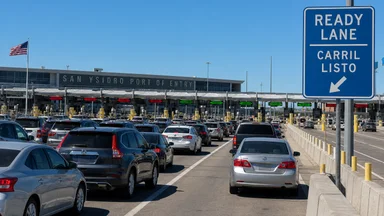
Driving south from San Diego into Tijuana on a weekday morning, the sheer number of lanes is the first thing that hits you. Some are labeled with electronic signs, others with hand-painted boards. Locals glide through one particular lane without even slowing down, while tourists in the next lane sit with engines off, windows down, papers fanned across the dashboard. The difference between those lanes can mean a five-minute crossing or a two-hour wait, and it can also determine whether an official asks to see your FMM tourist card at all.
The FMM, or Forma Migratoria Múltiple, is the document that allows most visitors to stay in Mexico for up to 180 days. It sounds simple, but its rules are full of exceptions that trip up even experienced travelers. The card is tied to your passport, not your vehicle. It is not required if you stay within the border zone. And it is checked at some checkpoints but not others, depending on which lane you choose and where you are headed.
This guide is not about the best tacos or the most Instagrammable beach. It is about the operational side of entering Baja California: the lane you pick, the card you carry, and the mistakes that get people turned around at military checkpoints or sent back to the border. I have crossed this border more than forty times over the past decade, and I have made most of these mistakes myself. Once, I drove all the way to Ensenada without realizing my FMM had expired two days earlier; the officer at the checkpoint let me off with a warning after a lengthy lecture. The goal here is to help you avoid that kind of stress.
Why the Lane You Pick at the Border Can Decide Your Whole Trip
At the San Ysidro crossing, the busiest land border in the world, the choice between the Ready Lane and the regular lane is not just about speed. The Ready Lane is designed for vehicles with RFID-enabled travel documents, like a US passport card or a Sentri card. It is faster, but it also means officials expect you to have your documents pre-scanned and your paperwork in order. The regular lane is slower, but it is where most tourists end up, and it is where officials have more time to ask questions.
What many first-timers do not realize is that the lane choice can also affect whether your FMM is checked. In the regular lane, officers are more likely to ask for your FMM if you are driving beyond the border zone. In the Ready Lane, the electronic scan may flag your passport, but it does not automatically tell the officer whether you have a valid FMM. Locals know this. They keep their FMM tucked inside their passport, and they use the Ready Lane when they have the right documents, because it means less time with the window down.
The risk of picking the wrong lane is not just delay. If you are in the Ready Lane without an RFID document, you will be redirected to the regular lane, which can add an hour or more. If you are in the regular lane with a car that reeks of marijuana or a trunk full of unopened bottles of tequila, you may get a secondary inspection. The lane itself does not cause these problems, but it sets the tone for how much scrutiny you receive.
There is also the Otay Mesa crossing, east of San Ysidro, which is often less crowded. It has its own Ready Lane and regular lanes, and it is the preferred route for commercial trucks. If you are heading to the beaches of Rosarito or Ensenada, Otay Mesa can save you time, but it has the same lane logic. The key is to know before you arrive which lane you qualify for, and to have your documents in the order an officer expects.
The Tourist Card: Six Months That Almost Nobody Uses Fully
The FMM is valid for up to 180 days, but the vast majority of visitors stay far less. According to Mexican immigration data, the average tourist stay in Baja California is around a week. That means most people do not come close to using their full allowance, yet they still manage to overstay because they forget the date they entered. The FMM is stamped with your entry date, but the exit date is not always written clearly, and the card itself is easy to lose.
Overstaying an FMM carries real consequences. Fines are calculated per day over the limit, and in some cases, travelers have been banned from re-entering Mexico for a period of time. The exact figures are not published in a single table; they depend on the discretion of the officer and the length of the overstay. The safest approach is to leave before your 180 days, or to apply for an extension. I have heard anecdotal reports of fines ranging from roughly 500 to 2,000 pesos, but these are not official numbers; the actual penalty is set by the officer and can vary widely.
Extensions are possible, but they are not a simple online form. You must visit an immigration office, fill out a request, and pay a fee. The process can take several hours, and it is not guaranteed to be approved. For most travelers, the extension is not worth the hassle, because they are not staying long enough to need it. But if you fall in love with Baja and decide to stay for six months, you should start the extension paperwork at least a month before your card expires.
One detail that confuses people: the FMM is tied to your passport, not to your vehicle. If you drive into Baja, your car needs a separate temporary import permit, but that permit is connected to your vehicle's VIN and your passport. Losing your FMM while keeping your car permit does not help you; you need both to exit the country without penalties. Keep them together, preferably in a zippered pouch that you do not open at the beach.
Crossing by Car vs. Walking: Different Paperwork, Same Confusion
If you walk across the border into Tijuana, the rules are simpler. You do not need an FMM if you stay within the border zone, which is typically the area within 20 kilometers of the border. That zone includes most of Tijuana, and it means you can cross on foot, walk around the city, and return the same day without any paperwork. But the moment you take a bus or a taxi beyond that zone, you need an FMM, and you are supposed to have it before you board.
Driving changes everything. A car requires a temporary import permit, which is a separate document from the FMM. The permit is issued at the border or online, and it costs a fee that is refunded when you leave the country, provided you follow the rules. The permit is tied to your vehicle's registration, and it is checked at military checkpoints that are common on the highways south of Ensenada. If you do not have the permit, your car can be confiscated.
The confusion arises because the border zone exemption applies to people, not to vehicles. You can walk into Tijuana without an FMM, but you cannot drive your car into Tijuana without a temporary import permit, even if you only go a few blocks. The permit is required as soon as you cross the border in a vehicle, regardless of distance. This is a common mistake, and it leads to long conversations with officials who have heard every excuse.
Military checkpoints are another layer. They are not immigration checks; they are security checks. Officers may ask to see your car permit and your FMM, but they are also looking for weapons, drugs, and other contraband. The checkpoints are more frequent on the highway to Ensenada and southward. If you have all your documents in order, the stop takes a minute. If you are missing something, you may be asked to pull over and wait while they verify your status.
The Tijuana Checkpoint: Where Lines Tell the Truth
The San Ysidro crossing is the busiest land border in the world, with an average of around 70,000 vehicles crossing northbound every day. The lines back up for hours during peak times, especially on weekends and holidays. The Ready Lane is designed to speed things up, but it only works if you have the right documents. The regular lane can be a crawl, and the truth is that no one knows exactly how long it will take until you are in it.
Officials at the Tijuana checkpoint occasionally wave cars through without looking at documents. This is common during high-traffic periods, when the goal is to move vehicles as quickly as possible. But do not count on it. I have seen a car get waved through while the one behind it got a full inspection. The difference was not the lane; it was the behavior of the driver. The car that got waved through had its windows down, documents visible, and the driver looking straight ahead. The car that got stopped had tinted windows and a nervous driver.
The Ready Lane at Tijuana uses RFID technology, which means your passport card or Sentri card is scanned electronically as you approach. The system is supposed to reduce wait times, but it is not foolproof. If your card is damaged or if the reader is down, you will be sent to the regular lane. Locals know this, and they often check the border crossing app before they leave home to see which lanes are moving.
The lesson is not to avoid the Ready Lane, but to understand that it is a privilege, not a guarantee. Keep your documents accessible, have your RFID card ready, and do not assume that a green light means you are through. The checkpoint is a place where patience is not just a virtue; it is a survival skill.
Common Paperwork Mistakes That Get Travelers Turned Around
The most common mistake is forgetting to get your FMM stamped when you leave Mexico. The FMM has two parts: the entry stamp and the exit stamp. If you do not get the exit stamp, the system may think you overstayed, even if you left on time. This can trigger a fine on your next visit, or even a temporary ban. The solution is simple: when you cross back into the US, find the immigration officer and ask for an exit stamp before you walk or drive away.
Losing the pink copy of your temporary import permit is a close second. The permit is issued with a pink copy that you are supposed to keep with the vehicle. If you lose it, you cannot prove that you have a permit, and you may be fined or have your car impounded. The permit is also tied to your credit card, so the refund can be processed when you leave, but without the pink copy, the process is much harder.
Using a photocopy instead of the original is another mistake. Officials at checkpoints are trained to spot photocopies, and they will not accept them. You need the original FMM and the original car permit, not a scan on your phone. I have seen travelers argue that their phone photo is just as good, and they always lose that argument.
Passport validity is a third issue. Many travelers assume that their passport is valid as long as it is not expired, but Mexico requires that your passport be valid for at least six months beyond your intended stay. If your passport expires in two months, you will not be allowed to enter, even if your FMM is valid. This is a rule that is easy to miss, and it has turned around many travelers at the border.
Finally, there is the assumption that you can pay the temporary import permit fee with any credit card. In practice, the system accepts most major cards, but it does not accept prepaid cards or some foreign-issued cards. If your card is declined, you will need to pay in cash, and the fee is not small. It is a good idea to carry enough cash to cover the fee, just in case.
What Locals Actually Do: Practical Habits Worth Copying
Locals do not have a secret trick; they have habits. They keep their FMM tucked inside their passport, and they keep their passport in a zippered pocket of their bag. They do not rummage through the glove compartment at the checkpoint. They have their documents out and ready before they reach the officer. This small habit saves time and reduces stress, and it is the single most effective thing you can do.
They also cross early in the morning. The lines at San Ysidro start building at around 6 a.m., but they are longest in the late afternoon and evening, when commuters are heading home. If you can cross before 7 a.m., you will often sail through. Locals who live in San Diego and work in Tijuana know this, and they time their commutes accordingly. As a tourist, you have more flexibility, so use it.
Locals know the border zone rules by heart. They know that they can go to a taco stand in Tijuana without an FMM, but they need one to go to Rosarito. They know that their car needs a permit, even for a day trip. They do not question these rules; they just follow them. This is not about blind obedience; it is about efficiency. Arguing with an official is a sure way to spend more time at the checkpoint.
They renew permits before they expire, not after. If you are staying longer than planned, do not wait until the last day to extend your FMM. The immigration office in Tijuana is often crowded, and the process can take hours. Start early, bring all your documents, and be prepared to wait. Locals also ask officials directly when they are unsure. A quick question to a uniformed officer is better than a guess that leads to a fine.
Finally, locals do not rely on influencer shortcuts. They do not trust a TikTok video that says you can cross without a permit if you wave a certain way. They know that the rules are enforced, and they respect them. That respect is not fear; it is practical. The cost of a mistake is higher than the cost of following the rules.
The Takeaway: Plan for the Checkpoint, Not Just the Destination
Baja California is a beautiful place, with beaches, mountains, and a food scene that rivals any city in the world. But the border is part of the trip, and it deserves as much planning as your hotel or your itinerary. The lane you choose, the documents you carry, and the stamps you collect are not bureaucratic details; they are the difference between a smooth crossing and a nightmare.
Start by checking your passport validity. If it expires within six months, renew it before you plan your trip. Then, decide whether you need an FMM. If you are driving, you also need a temporary import permit. If you are staying within the border zone, you can skip the FMM, but do not skip the car permit. Make copies of everything, but keep the originals in a safe place.
When you approach the border, choose your lane based on your documents, not on the length of the line. If you have an RFID card, use the Ready Lane. If not, use the regular lane and be prepared to wait. Keep your documents in your hand, not in your bag. And when you leave, make sure you get the exit stamp. It is a small step that can save you a lot of trouble later.
The border is not a place for shortcuts or improvisation. It is a place for preparation and patience. Locals know this, and they do it every day. The good news is that the rules are not complicated. They are just numerous, and they are easy to forget when you are excited about a vacation. So write them down, put them in your phone, and review them before you cross. A little planning goes a long way, and it can keep you on the road to Ensenada instead of in a line at the checkpoint.
Consider the story of a friend of mine, a photographer who drove down for a weekend shoot near Ensenada. She had her FMM and car permit in order, but she forgot to get her exit stamp when she returned to San Diego. Three months later, she tried to cross again and was flagged for a supposed overstay. It took two hours at the immigration office to sort out, and she missed her appointment. That is the kind of headache a simple stamp can prevent.
For more on how practical details shape travel, see how Portuguese ferry timetables or Shinkansen reservations work. And if you are heading further south, Cusco lodging peaks tell a similar story about demand and planning.