Kenya Safari Shoulder Season Rain Reveals Green Corridors July Bookings Hide

I booked my first Kenya safari for July based on the standard advice: dry season, migration peak, the only time to go. That advice was incomplete. July does offer the Great Migration, but the green corridors that make the landscape come alive appear months later, after the short rains, when tourist numbers drop by roughly 40 percent. This is the story of how I learned to stop chasing dust and start looking for grass.
Why July is a Mirage for the Classic Dry-Season Safari
Brochures show endless golden plains, dust clouds kicked up by wildebeest, and lions lounging under acacia trees. The reality is more complicated. In the Maasai Mara, July can still surprise you with rain. The so-called short rains of November–December are predictable, but the long rains of March–May sometimes linger, and July occasionally gets unseasonable showers. The grass is often dry and brown, and many animals have already dispersed into the bush.
Peak-season bookings mean you are competing with hundreds of other vehicles. At a Mara River crossing point, it is not unusual to see 40 to 50 Land Cruisers lined up, engines idling, tourists jostling for a view. The experience becomes less about wilderness and more about traffic management. Meanwhile, the green corridors—the ribbons of fresh grass and dense shrubbery that follow the rains—are absent. They emerge only after the short rains, usually from late November into December, when the landscape transforms.
What July does offer is predictability of a different kind: high prices, full lodges, and a rigid itinerary. If you want to book a tent at a popular camp in the Mara, you need to reserve eight months ahead. Even then, you might end up in a satellite camp far from the main action. The premium you pay for July often buys you a spot in a queue, not a private view of the migration. As one guide in Nairobi told me, “July is for people who want to say they saw the migration. January is for people who want to see it properly.”
The green corridors appear only after the short rains, when the grass turns green. In the dry season, animals concentrate around permanent water sources, making them easier to spot. But the concentration also means competition and stress. In the green season, they spread out, following fresh browse. You might not see a million wildebeest at once, but you will see them behaving naturally, grazing, calving, and moving in smaller, more intimate herds. That is a trade-off worth considering.
The Short Rains Window: When Green Corridors Actually Appear
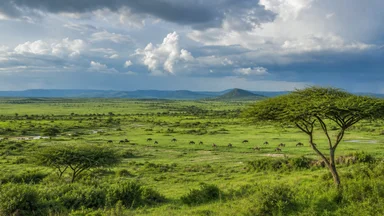
The short rains in Kenya typically fall from November through December, sometimes spilling into early January. These are not the heavy, relentless downpours of the long rains in April and May. They are sharp, dramatic storms that clear the air and trigger explosive plant growth. Within two to three weeks, the dry brown plains turn a vivid green. Grass that seemed dead rebounds with a vigor that surprises even seasoned guides. The green corridors—swaths of fresh vegetation along drainage lines and in valleys—become highways for wildlife.
For herbivores, this is a feast. Zebra, wildebeest, and gazelle disperse from the crowded riverine areas into the open plains, where the new grass is more nutritious. Predators follow. Cheetahs, in particular, thrive in the short-grass areas that appear after the rains. Their hunting success rate increases because the shorter grass gives them better visibility. Lions, too, adjust their territories to track the herds. The result is a safari experience that feels less like a zoo drive and more like a wildlife documentary.
Tourist numbers drop by around 40 percent compared to July. That means fewer vehicles at sightings, more flexibility in your itinerary, and a quieter bush. Accommodation rates often drop by 20 to 30 percent, and some lodges offer special shoulder-season packages. The airstrips in the Mara are less crowded, and flights from Nairobi are cheaper. For example, a round-trip charter from Wilson Airport to the Mara can cost roughly $100 to $150 less per person during shoulder season compared to peak July.
The catch is that the short rains are not entirely predictable. Some years the rains come early, in October; other years they delay until December. But even if you hit a rainy week, the storms usually pass within an hour, leaving behind that fresh, clean air and a landscape that glows. As a guide in the Mara Conservancy put it, “Rain is not the enemy. Rain is what makes the magic happen.” The green corridors are the reward for traveling outside the comfort zone of the brochure calendar.
Three Named Pitfalls of the Peak-Season Mindset
1. The Mara River Crossing Hype
Every brochure features a photo of wildebeest thrashing through crocodile-infested water. The Mara River crossing is the iconic image of the Great Migration. But here is the truth: the crossings are not guaranteed at any time of year. They depend on rainfall patterns, river levels, and the whims of the herds. In July, the herds are often still in the northern Serengeti, not yet crossing into the Mara. Even when they do cross, the spectacle can be anticlimactic—a trickle of animals, not a torrent. The best crossings often happen in August and September, but even then, you are competing with dozens of vehicles. The promise of the crossing is oversold, and the disappointment is real.
2. Vehicle Congestion at Sightings
In July, the Mara can feel like a parking lot. At a lion kill, it is common to see 30 to 50 vehicles jostling for position. The guides communicate by radio, so once a sighting is reported, a convoy descends. This is not the solitary wilderness experience you imagined. Some guides try to avoid the crowds by taking clients to less visited areas, but the pressure from lodges to deliver “the big five” often forces them into the fray. The congestion is not just annoying; it affects wildlife behavior. Animals become habituated to vehicles, and some studies suggest that chronic disturbance can alter feeding and breeding patterns.
3. Premium Rates for the Same Experience
Peak-season rates can be 30 to 50 percent higher than shoulder-season rates, for essentially the same product. You pay more for a room, a vehicle, and a guide, but the experience is often diluted by crowds and dust. Some lodges even reduce services during peak season because they are operating at maximum capacity. Meals become buffets instead of a la carte, game drives are shorter to accommodate multiple groups, and the personal attention you might receive in low season evaporates. The premium you pay does not buy you a better experience; it buys you a seat at a crowded table.
What the Guides Won't Tell You About Shoulder-Season Logistics
Guides have a financial incentive to keep you in peak season: that is when they earn the most. But off the record, many will admit that shoulder season offers a superior experience. One guide in the Mara told me that the roads are actually better after the short rains because the grading crews repair the damage from the long rains. The dust settles, and the tracks become firm and smooth. Driving across the plains is less bone-rattling, and you can cover more ground without feeling like you have been through a washing machine.
Airstrips are another hidden advantage. In July, the Mara's main airstrips—like the one at Keekorok or Musiara—are busy with charter flights landing every 15 minutes. In shoulder season, you might have the airstrip to yourself. That means less waiting, less dust, and a more relaxed start to your safari. Some lodges even offer discounted rates if you book during the green season, sometimes including free upgrades or complimentary activities. For example, a camp in the Mara North Conservancy might include a night game drive or a bush walk at no extra cost in January, while charging extra for the same in July.
Park fees are another factor. The Kenya Wildlife Service (KWS) charges a flat daily fee for national parks—roughly $60 to $80 per adult per day—but conservancy fees can vary. In the Mara, the conservancy fees are set by the landowners, and some reduce their rates during the shoulder season. The difference can be significant: a family of four might save $200 to $300 per day by traveling in February instead of July. The savings add up, and they can be redirected toward a longer stay or a better guide.
Lake Nakuru is a prime example of a destination that peaks in the wet season. The lake's water levels rise after the rains, attracting thousands of flamingos and other waterbirds. The birding is spectacular from November to March, yet most tourists skip it in favor of the Mara. A visit to Lake Nakuru during the green season offers a quieter, more vibrant experience—and you can combine it with a trip to the Mara without the crowds.
The Green Migration: A Counter-Intuitive Wildlife Pattern
The Great Migration is often described as a single, massive herd moving in a clockwise loop between Tanzania and Kenya. The reality is more fragmented. During the green season, the herds split into smaller groups, each following local rainfall patterns. Instead of one mega-herd, you get dozens of smaller herds spread across the landscape. This might sound less impressive, but it actually offers better viewing. With fewer animals concentrated in one spot, you can observe their behavior more intimately—a mother licking her newborn calf, a zebra stallion herding his mares, a cheetah stalking from a rise.
Calving season in January and February is one of the best-kept secrets. The wildebeest drop their calves in the short-grass plains of the southern Serengeti and northern Mara, where predators lurk. The calving peak is a frenzy of birth and death—a raw, unfiltered natural drama. Lions, hyenas, and cheetahs are drawn to the abundance of vulnerable newborns. A cheetah sighting in the green season is more likely because the short grass gives them the advantage. I have seen three cheetah hunts in a single day in February, something that would be rare in July when the grass is tall and the prey is more dispersed.
Photography also improves in the green season. The dust settles, the light is softer, and the contrast between the green grass and the animals is striking. You don't need a telephoto lens to get a good shot; a standard zoom will do, because the animals are often closer and more relaxed. The golden hour in the green season is truly golden, with the low angle of the sun casting long shadows and illuminating the grass. The lack of dust means your camera gear stays cleaner, and you spend less time cleaning sensors and more time shooting.
The downside is that you might not see the classic image of a million wildebeest stretching to the horizon. You will see plenty of animals, but in smaller, more dispersed groups. For some travelers, that is a disappointment. For others, it is the difference between a wildlife spectacle and a genuine wilderness experience. The green migration is not about numbers; it is about quality.
Packing and Planning for the Unadvertised Reality
If you decide to book a shoulder-season safari, your packing list needs to change. The first item is a waterproof jacket. Even in the short rains, the storms can be intense. A good-quality rain jacket with a hood is essential. Lightweight, quick-drying trousers and a pair of waterproof walking shoes are also useful. The mornings can be cool, especially after a rain, so a fleece or a light sweater is advisable. The afternoons are warm, but not as hot as July, so you will be comfortable in layers.
Mosquito risk is lower in the dry season, but it is not zero. In the green season, the risk increases slightly, especially near water sources. Bring a reliable insect repellent and consider taking antimalarial medication. Consult your doctor before traveling. The health advice is standard, but many travelers forget that the green season brings more insects. A mosquito net is usually provided by lodges, but a small travel net can be a backup.
Binoculars are more useful than a telephoto lens in the green season. With animals closer and more relaxed, you don't need extreme magnification. A pair of 8x42 binoculars is ideal. They are lighter, easier to handle, and give you a wider field of view. A telephoto lens is still useful, but it is not the priority. A good pair of binoculars will enhance every sighting, whether it is a bird in a tree or a lioness in the grass.
Book flexible itineraries with refund policies. The weather is less predictable in the shoulder season, and flights can be delayed by storms. A flexible booking means you can adjust your schedule without penalty. Some lodges offer a “rainy day” policy that includes a free activity if your game drive is cut short. Ask about this when booking. The flexibility also allows you to extend your stay if you find a particularly good sighting. The green season is less rigid, and that is its strength.
Local guides prefer smaller groups in the rain. A group of four to six people in a vehicle is ideal. The guide can take you off the main tracks, into areas where larger vehicles cannot go. The rain creates mud, and the smaller vehicles are more maneuverable. The guide will also appreciate that you are not in a hurry to tick off a checklist. The green season is for slow, patient observation. If you rush, you miss the subtle details—the way a chameleon changes color, the sound of rain on the leaves, the smell of wet earth.
I also recommend carrying a reusable water bottle and a small first-aid kit. The green season can bring sudden temperature drops, and a hot drink from a thermos can be a lifesaver. Some lodges provide packed lunches for day trips, but it is wise to bring your own snacks. The roads can be muddy, and a long game drive might turn into a half-day outing. Being self-sufficient makes the experience more enjoyable.
One more thing: download offline maps and carry a power bank. Cell service in the Mara is improving, but it is still spotty. Offline maps on your phone can help you navigate between camps, and a power bank ensures your devices stay charged. Many lodges now have solar charging stations, but having your own backup is never a bad idea.
The Verdict: Reschedule Your Safari by Three Months
If you are planning a Kenya safari, consider moving your trip from July to late January or early February. The green corridors are at their peak, the crowds are minimal, and you will save 20 to 30 percent on accommodation. The wildlife is more dispersed, but that is not a bad thing. You will have more intimate encounters, better light for photography, and a genuine sense of discovery. But I also recognize that July works for many people: school holidays, fixed work schedules, or simply the desire to see the migration in its full spectacle. If you must travel in July, you can still have a good safari—just manage your expectations. The river crossings are not guaranteed, the vehicle congestion is real, and the premium you pay does not buy you a better experience. The shoulder season offers a different kind of magic—one that is quieter, greener, and more authentic. The best advice I can give is to talk to a specialist operator who understands the nuances of timing. Ask about the short rains, the green corridors, and the calving season. Look for itineraries that offer flexibility. And don't be afraid to go against the grain of the brochure. The green season is not a compromise; it is a choice to see Kenya as it truly is, not as the marketing departments imagine it.
For more on navigating travel logistics in East Africa, check out our guide to the Nairobi Kariokor Market cash-only rule, which can catch travelers off guard. And if you are considering other seasonal travel, our piece on the Hardanger Plateau cabin permits offers a similar lesson in timing.