One State’s Database Catch That Traps a Payday Loan in a Second APR Layer


When a borrower in Ohio takes out a $300 payday loan, they expect to pay interest—perhaps capped at 36% APR under state law. But a separate fee, often $10 to $15, appears on the receipt: the database verification fee. This charge, mandated by the state to check the borrower's loan history, is not counted as interest. The result is a second APR layer that can push the effective rate above 100%. This fee is a regulatory blind spot that traps borrowers in a cycle of debt, and it's growing more common as more states adopt real-time loan tracking databases.
Consider Maria, a single mother in Columbus, Ohio, who took out a $300 payday loan to cover an unexpected car repair. She was told the APR was 36%, but after a $45 database fee was added, her effective rate exceeded 400%. Maria did not realize the fee was separate from interest; she only saw the total due. Stories like Maria's are common, yet the database fee remains largely invisible in policy debates.
The APR That Hides in Plain Sight
Payday loans are short-term, high-cost credit products typically due on the borrower's next payday. Many states cap the interest rate at 36% APR, but lenders have found workarounds. One of the most insidious is the database fee. When a lender submits a loan application to a state-mandated database—designed to prevent borrowers from taking out multiple loans they cannot repay—the database operator charges a fee per query. That fee, typically $1 to $5 per transaction but sometimes as high as $15 per loan, is passed directly to the borrower. It's disclosed as a separate line item, not as interest, so it falls outside the APR cap.
Consider a $300 loan with a 10% APR over 14 days. The interest is about $1.15. If the lender adds a $45 database fee, the total cost jumps to $46.15. The effective APR, when the fee is included, exceeds 400%. Even under a 36% cap, the database fee can add 40 to 60 percentage points to the APR. The borrower sees a low headline rate but pays far more. This fee is not always disclosed clearly. In a 2022 report, the Consumer Financial Protection Bureau (CFPB) noted that database fees are often buried in fine print or called "verification fees" or "compliance fees." Borrowers may not connect the charge to the state database. Because the fee is not counted as interest, it escapes the usury limits that protect consumers from predatory lending. The CFPB flagged this as a concern, but no federal rule has closed the loophole.
The database fee is particularly harmful for low-income borrowers who can least afford unexpected costs. A $10 fee on a $200 loan may seem small, but for someone living paycheck to paycheck, it can mean choosing between paying for groceries or repaying the loan. The fee also increases the likelihood of default, which triggers late fees and additional interest. The second APR layer is not just a theoretical problem; it has real consequences for millions of Americans.
How a State Database Became a Fee Engine
As of late 2024, 16 states require payday lenders to check a real-time database before issuing a loan. These databases were created to prevent borrowers from taking out multiple loans simultaneously—a practice that often leads to default. The databases are run by private vendors like Clarity Services and Veritec, which charge lenders per query. The lenders then pass that cost to the borrower, often with a markup.
Originally, the fees were modest—around $1 per query. But as states expanded database requirements, the fees grew. In Ohio, some lenders charge $15 per loan for database access. In Texas, the fee can reach $10. Florida allows fees up to $5 per transaction. The database operators profit from transaction volume, so they have an incentive to keep fees high and resist regulation. Lobbying by database firms has helped keep these fees unregulated in many states.
The fee structure is a classic example of regulatory capture. The database was meant to protect consumers, but it has become a profit center for vendors and lenders. State regulators collect fees from database operators, creating a conflict of interest. Some states, like Oregon, have capped all fees at cost-recovery, but most have not. The result is a fee that serves no consumer benefit—it's a surcharge on a regulatory requirement.
Borrowers rarely understand that the fee is optional in the sense that they could avoid it by using a lender that does not charge it, but in states with mandatory database checks, every lender charges it. The fee is effectively a tax on borrowing, collected by private companies. It adds no value to the borrower; it simply increases the cost of credit. The database fee is a hidden engine of profit that has escaped scrutiny for years.
The Second APR Layer: A Numerical Breakdown
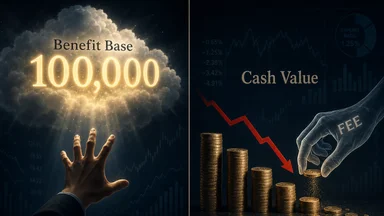
To understand the impact, consider a typical two-week loan of $200. Under a 36% APR cap, the interest is about $2.77. If the lender adds a $10 database fee, the total cost is $12.77. The APR on the interest alone is 36%, but the APR on the total cost is roughly 166%. The database fee accounts for 130 percentage points of that APR—far more than the interest itself.
This second APR layer is not subject to usury limits in most states. State laws cap the interest rate but exclude fees that are "reasonable" or "necessary." Lenders argue that the database fee is a cost of doing business, like a credit check fee. But unlike a credit check, which can help the borrower by verifying their ability to repay, the database fee serves only the lender's compliance need. The borrower gets no benefit from it.
Some estimates put the average database fee at $5 per loan. For a borrower who takes out 12 loans a year—common among payday customers—that adds $60 annually. For frequent borrowers, who take out 20 or more loans a year, the fee can exceed $120. That's money that could go toward groceries, gas, or savings. Instead, it flows to database vendors and lenders.
Research from the Pew Charitable Trusts found that 70% of payday borrowers use five or more loans per year. Many roll over loans repeatedly, paying fees each time. The database fee compounds the cost, making it harder to escape the debt cycle. A $10 fee on a $200 loan might not seem like much, but over a year, it adds up. The second APR layer is a silent drain on borrowers' finances.
Who Benefits from the Hidden Surcharge
The primary beneficiaries are database vendors like Clarity Services and Veritec. These companies charge lenders per query, and some states allow them to set the fee. In Ohio, for example, the fee is set by contract between the state and the vendor, with little public oversight. The vendors profit from every loan originated, so they have a financial interest in maintaining high fees and expanding database mandates.
Lenders also benefit. By passing the database fee to borrowers, they keep their base APR low and avoid regulatory scrutiny. A lender can advertise a 36% APR while charging an effective rate of 100% or more. This allows them to compete on price while still extracting high profits. The fee also provides a buffer against default risk, since the borrower pays it upfront.
State regulators collect fees from database operators, creating a revenue stream that can make them reluctant to cap the fees. In some states, the database fee is a significant source of funding for consumer protection programs. This creates a conflict of interest: regulators may be hesitant to eliminate a fee that funds their operations. Lobbying by database firms and lenders has helped keep the fees unregulated in many states, including Ohio, Texas, and Florida.
Borrowers, of course, lose. They pay more for credit without any additional protection. The database was supposed to prevent over-lending, but studies show it has little effect on borrower outcomes. A 2019 study by the Federal Reserve Bank of Philadelphia found that database mandates did not reduce loan defaults or improve repayment rates. The fee, then, is a pure cost with no benefit to the consumer.
Borrower Outcomes: Trapped in a Debt Cycle
The database fee increases the total cost of a payday loan by 30 to 50% on average, according to industry estimates. For a borrower already struggling to make ends meet, that extra cost can push them into a cycle of repeat borrowing. A 2020 study by the Center for Responsible Lending found that borrowers who pay database fees are more likely to roll over their loans, incurring additional fees and interest.
Consider a borrower who takes out a $300 loan with a $15 database fee. After two weeks, they owe $315 plus interest. If they cannot repay, they pay another $15 fee to roll over the loan. After four rollovers, they have paid $60 in database fees alone—20% of the original loan amount. The debt grows, and the borrower becomes trapped.
This is not hypothetical. Research by the Pew Charitable Trusts found that the average payday borrower spends $520 per year on fees and interest for a $375 loan. Database fees account for a significant portion of that cost. In states with database mandates, borrowers are more likely to report difficulty repaying their loans. The fee is a hidden driver of the debt trap that payday lending is known for.
The database fee also affects borrowers' credit scores. When loans default, lenders report to credit bureaus, damaging the borrower's credit history. This makes it harder to access mainstream credit, forcing them back to payday lenders. The fee, then, is not just a cost—it's a barrier to financial health. Borrowers who pay it are more likely to become long-term payday customers, trapped in a cycle of high-cost debt.
Policy Fixes That Could Unhook the Trap
Several policy changes could eliminate the database fee's harm. The simplest is to include database fees in APR calculations for all loans. If the fee were counted as interest, it would be subject to usury caps. This would force lenders to either absorb the cost or reduce other fees. The CFPB has the authority to define APR broadly, but as of late 2024, it has not done so.
Another approach is to cap database fees at cost-recovery, as Oregon did in 2019. Oregon's 36% all-inclusive cap applies to all fees, including database charges. Lenders must absorb the cost or reduce their interest rates. This model has been effective: Oregon has one of the lowest payday loan default rates in the country. Other states could adopt similar caps.
A third option is to require lenders to absorb the database fee, rather than passing it to borrowers. This would make the cost of compliance visible to lenders, who might then push for lower fees from vendors. It would also simplify the borrower's experience: they would see a single APR that reflects the true cost of the loan. Some states, like New York, already prohibit payday lending altogether, but that approach is politically difficult in many states.
Federal legislation could also close the loophole. The Military Lending Act (MLA) caps APR at 36% for loans to service members, but it excludes database fees. Closing this exemption would protect military families from the hidden surcharge. A similar fix for all borrowers could be included in broader consumer credit reform. But political will is lacking, and industry lobbying is strong.
However, each fix comes with trade-offs. Including database fees in APR could lead lenders to raise other fees or reduce loan availability, potentially pushing borrowers to unregulated lenders. Capping fees at cost-recovery requires regulatory oversight that may be underfunded. Requiring lenders to absorb the fee could reduce competition among lenders, as smaller players might struggle with the added cost. And federal legislation faces partisan gridlock. These trade-offs do not justify inaction, but they highlight the complexity of reform. The database fee is a symptom of a broken system, and fixing it requires careful balancing of consumer protection, market dynamics, and political feasibility.
A Broader Pattern of Hidden Fees
The database fee is not an isolated phenomenon. In the payday lending industry, hidden fees are common. Origination fees, processing fees, and late fees all add to the cost of borrowing. The database fee is unique because it is mandated by the state, yet it escapes regulation. This pattern extends to other financial products: overdraft fees, credit card late fees, and prepaid card maintenance fees all have similar dynamics, where a small charge becomes a significant burden over time.
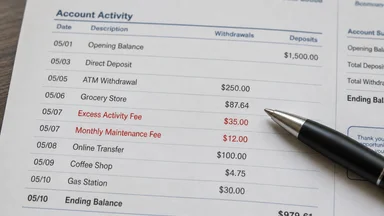
For example, overdraft fees average $35 per transaction, and banks earn billions annually from them. Like database fees, they are often disclosed in fine print and not counted as interest. Consumer advocates have pushed for reform, but banks resist. The database fee is a microcosm of a larger problem: fees that are small in isolation but devastating in aggregate. Regulators have begun to act—the CFPB capped overdraft fees at $5 for some banks in 2024—but database fees remain untouched.
Another parallel is the "monthly maintenance fee" on some prepaid cards. These fees can wipe out a small balance, similar to how database fees erode the value of a payday loan. The common thread is that fees that are not counted as interest escape scrutiny, even when they are mandatory. The database fee is a textbook case of how regulatory design can create unintended consequences.
To address this pattern, some experts advocate for a holistic approach: all fees related to credit should be included in APR, regardless of their label. This would eliminate the incentive to create new fee categories. Others argue for a flat prohibition on certain fees, as Oregon did. The database fee debate is a test case for broader fee reform.
What Consumers Should Know
For borrowers considering a payday loan, it is important to understand the total cost. The database fee is often not obvious. Borrowers can ask the lender directly: "What is the database fee and how is it disclosed?" Some lenders bury the fee in fine print or call it a "verification fee." Asking for the total cost in dollars, not just the APR, can reveal the true expense. Comparing total costs across lenders is also useful, because APRs can be misleading when fees are excluded.
Not all lenders charge database fees; some absorb the cost. Borrowers can look for lenders that advertise a single APR that includes all fees. Checking state regulations is also helpful: in states like Ohio, only interest is capped; in Oregon, all fees are capped. Knowing the difference can inform choices.
If a database fee seems excessive, borrowers can report it to their state attorney general or the CFPB. The CFPB accepts consumer complaints online, and reports can help regulators identify abusive practices. Even if the fee is legal, it may be unfair or deceptive if not properly disclosed. Consumer complaints have led to enforcement actions in the past.
Beyond payday loans, alternatives exist. Credit unions offer small-dollar loans with lower rates. Some employers provide paycheck advances with no fees. Nonprofit credit counselors can help find resources. The database fee is just one trap in a system designed to profit from financial desperation. Understanding how it works is the first step to avoiding it.
This article is for informational purposes only and does not constitute personalized financial or legal advice. Consult a qualified professional for advice specific to your situation.