Shinkansen Reservations Expire at Departure While Green Car Walk-Ons Sit Empty

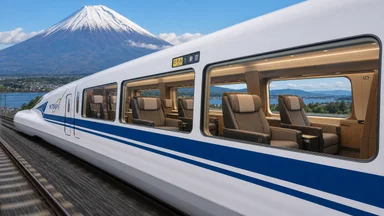
Japan's shinkansen network is a marvel of punctuality, but its seating system punishes the unprepared. A traveler who books a reserved seat and misses the train loses both the fare and the seat. Meanwhile, the Green Car, the first-class carriage, regularly departs with rows of empty seats. The contrast confuses visitors who assume that paying more guarantees availability. Understanding the rules before boarding can save money, time, and the frustration of standing for two hours.
The Empty Green Car Paradox
On a typical weekday morning on the Tokaido Shinkansen, the ordinary reserved cars fill to near capacity while the Green Car sits half-empty. The surcharge for Green Car comfort deters many leisure travelers, who prefer to save the extra few thousand yen for a meal or a hotel. Business travelers, the main users of Green Car, often book their seats in advance, but their numbers fluctuate with meeting schedules and weather disruptions.
The result is a daily mismatch: walk-on passengers crowd the unreserved coaches, sometimes standing for the entire journey, while the Green Car offers abundant empty seats. The operators do not release unsold Green Car seats to the unreserved section at departure, a policy that seems wasteful but is rooted in the premium brand of the service. Selling Green Car seats at the last minute would undermine the value for those who paid the full premium.
For the traveler without a reservation, the Green Car is not an option unless they pay the upgrade fee at the ticket gate. Many do not realize this is possible, or they assume the Green Car is fully booked. In reality, the conductor can often find a seat, especially on off-peak services. The key is to ask, not to assume.
Some argue that the system should be more flexible, allowing unreserved passengers to fill empty Green Car seats for a nominal fee. But the rail operators have resisted, citing the need to protect the premium experience. As a result, the paradox persists: empty seats and standing passengers coexist on the same train.
Why the Green Car Stays Cold
The Green Car commands a surcharge that can be double the base fare on long-distance runs. For a trip from Tokyo to Osaka, the Green Car surcharge adds roughly 5,000 yen to the base fare, a meaningful sum for a family or a budget traveler. The extra cost buys wider seats, more legroom, and a quieter atmosphere, but many riders decide the value is not there for a journey of a few hours.
Business travelers, who can expense the upgrade, dominate the Green Car. They appreciate the quiet and the guaranteed seat, and they book in advance to secure a window or aisle position. Leisure travelers, paying out of pocket, often choose the ordinary reserved car, which offers adequate comfort at a lower price. The gap between the two groups explains why the Green Car rarely fills to capacity except during peak travel seasons like Golden Week or the New Year holiday.
Rail operators rarely discount unsold Green Car seats for walk-ons. The official policy is that Green Car seats are sold only as reserved seats, and the upgrade must be purchased before boarding. Some stations have kiosks that allow last-minute upgrades, but the process is not widely advertised. Travelers who ask at the ticket window often discover that a Green Car seat is available for the next departure, even on busy routes.
There is a counterargument that the Green Car's emptiness is a feature, not a bug. The premium price ensures that the carriage remains exclusive, which is exactly what business travelers want. If the operator filled the Green Car with bargain hunters, the quiet atmosphere would disappear, and the premium brand would erode. This logic, while sound from a marketing perspective, does little to help the budget traveler who just wants a seat.
The Reservation Expiry Trap
A reserved shinkansen ticket is tied to a specific departure time. If the traveler misses that train, the reservation is void, and the seat is released to the standby list. There is no grace period, no automatic transfer to the next train, and no refund for the reserved-seat fee. The traveler must buy a new ticket, often at the full fare, and hope for a seat on the next departure.
This trap catches many visitors who underestimate the time needed to navigate a large station like Tokyo or Shin-Osaka. The platform gates close at the scheduled departure minute, and the train leaves on time, to the second. A traveler who arrives at the gate even one minute late will watch the train pull away, their reservation evaporating with it.
Refunds are possible only under certain conditions, such as a train delay of more than a certain number of minutes, but a personal delay does not qualify. The ticket office will not offer a refund for a missed reservation, and the traveler is left to rebook at the current fare, which may be higher than the original price if the train is busy.
The lesson is to build in buffer time. Arriving at the station 30 minutes early is not excessive, especially for travelers unfamiliar with the layout. The risk of losing a reservation is too high to cut it close. Some travelers choose to avoid reservations altogether, relying on the unreserved cars, which offer more flexibility at the cost of a possible standing journey.
How to Score a Green Car Seat
For the traveler who wants a Green Car seat without a prior reservation, the options are limited but real. The most straightforward method is to arrive at the ticket office early and ask for a Green Car upgrade on the next available train. Station staff can check the seat map and often find a seat, especially on off-peak departures.
Another approach is to use the ticket kiosks, which allow last-minute changes and upgrades. The kiosks display the seat availability for each train, and a traveler can select a Green Car seat if one is open. This method works best for travelers who are comfortable with the Japanese interface, though the machines have an English mode.
Timing matters. Green Car seats are more likely to be available on mid-morning or mid-afternoon trains, when business travel is lighter. Early morning and late evening trains, which carry commuters and business travelers, are more likely to be full. A traveler flexible with their schedule can often find a Green Car seat by choosing a less popular departure.
Shorter routes, such as the run from Tokyo to Nagoya, tend to have more Green Car availability than the full-length Tokyo to Osaka run. The demand for the longer route is higher, so the Green Car fills more often. A traveler willing to split the journey, with a stop and a rebooking, might find it easier to secure a Green Car seat for each segment.
The Overlooked Local Lines
Beyond the shinkansen, Japan's local and regional trains offer a different seating model. Local trains, which stop at every station, have no reserved seating and no Green Car. Passengers simply board and sit wherever they like, with no need for a reservation. These trains are slower than the shinkansen, but they are frequent and cheap, and they offer the flexibility that the bullet train lacks.
For a day trip from a city to a nearby town, a local train can be the better choice. The traveler can decide to leave at a moment's notice, without worrying about a reservation expiring. The seats are not as comfortable as the Green Car, but the journey is shorter, and the savings are significant.
Some regional express trains, such as the Limited Express services on non-shinkansen lines, have both reserved and unreserved cars. The unreserved cars are often less crowded than the shinkansen's, because the demand is lower. A traveler who is flexible can often find a seat in the unreserved section without paying the reserved-seat fee.
The local lines also connect to the shinkansen at major hubs, offering a way to reach smaller destinations that the bullet train passes by. A traveler heading to a rural onsen town might take the shinkansen to the nearest station, then transfer to a local line for the final leg. This combination allows for both speed and flexibility, and it avoids the reservation trap on the final segment.
When Reservations Actually Matter
There are times when a reservation is not just useful but essential. During peak travel seasons, such as Golden Week in early May, the Obon festival in August, and the New Year period, the shinkansen is packed. The unreserved cars fill to capacity, and passengers stand for the entire journey. A traveler without a reservation on these days is taking a significant risk.
Long-distance routes, such as the run from Tokyo to Hakata, are also more likely to be full, especially on weekends. The limited-stop trains, like the Nozomi, are popular with business travelers, and their reserved cars often sell out. A traveler who wants a guaranteed seat on these services should book in advance, ideally several days ahead.
Group travel is another situation where reservations matter. A family or a group of friends traveling together will want adjacent seats, which are only guaranteed with a reservation. The unreserved cars may have scattered seats, or none at all, and the group may be split up. For groups, the reservation fee is a small price to pay for the certainty of sitting together.
Early morning and evening commuter hours are also times to book ahead. The shinkansen carries commuters between cities, and the unreserved cars can be crowded even on weekdays. A traveler boarding at a popular station like Shinagawa or Kyoto might find the unreserved cars full, while the reserved cars have seats available for a fee.
Strategies for the Flexible Traveler
For those who value flexibility over certainty, there are strategies to minimize the risk of standing. One approach is to travel during off-peak hours, such as mid-morning or early afternoon, when the unreserved cars are less likely to be full. Another is to board at the origin station of the train, where the unreserved cars are empty and seats are plentiful. A traveler starting from Tokyo on a train that originates there has a better chance of finding a seat than someone boarding at a later stop like Shinagawa or Yokohama.
Another tactic is to use the train operator's mobile app to check real-time occupancy. The apps show the congestion level of each car, updated in near real time. A traveler can see which car has the fewest passengers and board accordingly, even in the unreserved section. This tool is available in English, and it turns the seating lottery into a calculated choice.
For those who dislike uncertainty, the reserved seat is worth the cost, but there is a middle ground: the non-reserved seat on a less popular service. Some trains, such as the Kodama on the Tokaido line, stop at every station and are less crowded than the faster Nozomi or Hikari services. A traveler who is not in a hurry can take a Kodama and enjoy a seat without a reservation, trading speed for comfort.
Finally, consider the Japan Rail Pass. Pass holders can reserve seats at no extra charge at the ticket office, and they can also use the unreserved cars without a reservation. The pass offers flexibility and value, but it requires planning to get the most out of it. A traveler with a pass can make last-minute reservations, but they must still arrive early to secure them, as the pass does not guarantee a seat.
Practical Takeaways for the Careful Traveler
The first takeaway is to book a reserved seat only when it is necessary. For a solo traveler on a weekday off-peak train, the unreserved car is often fine, and it allows for last-minute changes. For a group or a traveler on a tight schedule, the reservation is worth the cost.
Second, arrive early for walk-on options. A traveler who wants a Green Car upgrade should go to the ticket office or kiosk at least 15 minutes before departure. The staff can check availability and process the upgrade, but only if there is time before the train arrives.
Third, know the seating policy of the specific train. The shinkansen types differ in their car configurations, with some having more unreserved cars than others. The seat maps are available on the operator's website and on station displays, and a quick check can save a traveler from boarding the wrong car.
Finally, use the train operators' apps to check real-time occupancy. The apps show the congestion level of each car, updated in near real time. A traveler can see which car has the fewest passengers and board accordingly, even in the unreserved section. This tool is available in English, and it turns the seating lottery into a calculated choice.
The system is not perfect, and it rewards those who understand its quirks. The Green Car will continue to sit half-empty while the unreserved cars fill, and the reservations will continue to expire at departure. But a traveler who learns the rules can work around them, finding a seat and a comfortable journey without paying for a reservation they do not need. The key is to treat the shinkansen as what it is: a precise instrument that demands precision from its passengers. Those who adapt will find it a remarkable way to travel, and those who do not will learn the hard way. For a related look at how timing and pricing shape travel in other regions, see our piece on Cusco lodging peaks and the Tbilisi guesthouse rates that shift with the seasons.