One 1984 Regulation That Still Forces Insurers to Define Disability by Lift Capacity


In 1984, the Reagan administration issued a regulation under the Employee Retirement Income Security Act that let disability insurers define total disability as the inability to lift 50 pounds. That same rule still underpins most group disability policies in the United States. What was once a reasonable proxy for physical work capacity now excludes the vast majority of conditions that actually keep people out of the workforce — cognitive impairments, mental health disorders, chronic pain, autoimmune diseases, and long COVID. The rule has not been updated at the federal level since it was written, and the consequences for claimants are mounting.
The 1984 regulation emerged from a Department of Labor interpretation of ERISA, the federal law that governs employer-sponsored benefit plans. It defined total disability as the inability to perform "any gainful activity" — but allowed insurers to use a physical capacity test as a safe harbor. The most common version: a person is considered disabled only if they cannot lift 50 pounds repeatedly, or sometimes 25 pounds, depending on the policy. This became the industry standard almost overnight. Insurers liked the clarity. A bright-line test meant fewer disputes over what counted as disabled. Claim examiners could check a box: can the applicant lift a 50-pound bag of cement? If yes, no payout. The rule was embedded in group long-term disability contracts sold to employers, and it persists today. A 2023 survey by the Disability Management Employer Coalition found that roughly 70% of group policies still use a physical capacity test as a primary definition of disability.
The problem is that the economy has changed. In 1984, manufacturing and construction employed about 30% of the U.S. workforce, according to Bureau of Labor Statistics data. Today that figure is below 15%. Most jobs require sitting at a computer, managing projects, or interacting with people — none of which depend on lifting ability. Yet the lift test remains the gatekeeper for disability benefits, as if the workforce had not shifted in forty years.
Attempts to update the regulation have gone nowhere. The Department of Labor issued Field Assistance Bulletin 2000-05 in 2000, suggesting that plan fiduciaries consider a broader range of impairments, but that guidance is not binding. Insurers have largely ignored it — for example, in a 2019 case, a plan administrator for a large insurer continued to deny claims based on the lift test even after the claimant provided medical evidence of cognitive impairment. The rule remains in effect because no political coalition has pushed for change, and the insurance industry lobbies hard to preserve the status quo.
How a Physical Metric Misses Most Modern Disabilities
The lift test is a terrible predictor of who can actually work in a modern economy. Consider a software engineer with severe anxiety who cannot concentrate for more than 20 minutes. She can lift 50 pounds easily — her disability claim will be denied. A marketing manager with chronic fatigue syndrome who sleeps 14 hours a day can still hoist a box of files. Denied. A teacher with long COVID who experiences brain fog and collapses after two hours of standing can lift a stack of books. Also denied.
Data from the Social Security Administration show that mental disorders, musculoskeletal conditions, and neurological illnesses account for roughly 70% of approved disability claims. Physical strength is rarely the limiting factor. Yet private insurers continue to apply a test that captures only a tiny slice of real disability. A 2021 study in the Journal of Insurance Medicine estimated that fewer than 5% of long-term disability claims involve an inability to meet the lift standard. The rest are denied or forced into a separate, more subjective review process.
This mismatch is not accidental. Insurers benefit from a narrow definition because it reduces the number of claims they have to pay. The denial rate for ERISA disability claims has risen from roughly 35% in 2010 to over 47% in 2024, according to data from the Employee Benefits Security Administration. The lift test is a convenient first filter: if you pass it, the insurer can close the file without investigating your actual job duties or medical condition.
Claimants often do not realize the trap until they are in it. They assume disability means "unable to do my job." The policy says something else. The fine print defines disability by a physical standard that has nothing to do with their occupation. As we noted in a previous article about a similar contract loophole, insurers have long used narrow definitions to limit exposure. The lift test is just the most widespread example.
The Regulatory Gap: Why No Agency Has Revised the Standard
ERISA preempts state insurance laws, meaning that even if a state wanted to ban the lift test, it could not. The federal government has exclusive authority over employer-sponsored plans. That was the original intent — to create uniform national standards — but it also means that a 40-year-old rule is frozen in place unless Congress or the Department of Labor acts.
Congress has shown no appetite for reform. The insurance industry spent over $150 million on federal lobbying between 2018 and 2024, according to OpenSecrets, and has successfully blocked any bill that would require plans to use a functional, occupation-specific definition of disability. The Labor Department, for its part, last issued substantive guidance on disability definitions in 2000. Since then, it has focused on fee disclosures and fiduciary rules, not benefit definitions.
Courts have not filled the gap. ERISA gives plan administrators broad discretion to interpret policy language, and judges rarely second-guess those interpretations unless they are arbitrary and capricious. The Supreme Court has repeatedly upheld deferential review, making it nearly impossible for claimants to win on the merits of the definition itself. As one federal judge wrote in a 2022 decision, "The court's role is not to decide whether the plan's definition is wise, only whether it is consistent with ERISA."
The result is a regulatory vacuum. No agency has the mandate or the political will to update the lift test. The insurance lobby opposes any change. And the public — until they file a claim — has no idea that the standard exists. This is not a partisan issue; both parties have ignored it for decades. It is a structural failure of the regulatory process, one that leaves millions of workers with a false sense of security about their disability coverage.
Claim Denial Rates Climb as Definitions Stay Static
The consequences of the static definition are stark. Denial rates for ERISA disability claims have climbed roughly 35% since 2010, according to a 2024 analysis by the advocacy group United Policyholders. The same study found that 67% of denied claims involved conditions that were primarily non-physical — mental health, chronic pain, neurological disorders, or fatigue syndromes. In most of those cases, the initial denial letter cited the lift requirement as the reason.
Appeals rarely succeed. The ERISA appeals process is internal; the same insurer that denied the claim reviews it again. Success rates hover around 40%, and even then, the insurer may require additional documentation or a functional capacity exam that again tests physical strength. Claimants who persist often face a choice: accept a reduced settlement or file a federal lawsuit. Litigation under ERISA is expensive and slow — average time to resolution is 18 months — and courts rarely award damages beyond the policy benefit. Attorneys are reluctant to take cases with small potential payouts.
Many claimants simply give up. A 2023 report from the Consumer Federation of America estimated that only about 10% of denied claimants pursue an appeal beyond the first level. The rest absorb the loss, deplete their savings, or turn to public benefits like Social Security Disability Insurance, which has its own stringent criteria. The financial impact is severe: lost income during the wait averages over $40,000, and bankruptcy filings among denied disability claimants are roughly three times the national average.
Insurers, meanwhile, face no financial penalty for high denial rates. Stock prices of major disability carriers — including Unum, MetLife, and Cigna — have risen steadily over the past decade, with no correlation to denial statistics. The market rewards profitability, and denying claims is profitable. As long as the regulatory definition remains frozen, the business model works exactly as designed.
What a Modern Definition Would Look Like
A modern disability definition would start with the worker's actual job duties, not a generic physical test. The Department of Labor already has a tool for this: the O*NET database, which classifies occupations by required skills, abilities, and physical demands. A policy could reference the O*NET profile for the claimant's job and define disability as the inability to perform the essential functions of that specific occupation, with accommodations considered.
Such a definition would include cognitive and mental impairments. For example, if a job requires sustained concentration, memory, or interpersonal interaction, the inability to perform those tasks due to a medical condition would qualify as disability. Chronic pain and fatigue would be assessed based on their functional impact, not on whether the claimant can lift a weight. Periodic review — say every five years — would ensure the definition keeps pace with changes in medicine and the labor market.
Other countries already use broader criteria. Canada's long-term disability plans typically define disability by reference to the claimant's own occupation, with a separate test for total disability after two years. The United Kingdom's Employment and Support Allowance assesses functional capacity across a range of activities, including mobility, communication, and cognition. Neither relies on a lift test. The U.S. is an outlier among developed nations in clinging to this physical standard.
Some insurers have voluntarily moved toward occupation-specific definitions for higher-priced individual policies, but group plans — which cover most workers — remain tied to the 1984 rule. The cost of updating group plans would be modest, according to actuarial estimates cited in a 2022 Congressional Research Service report. Expanding the definition to include cognitive and mental conditions would increase claim costs by roughly 5–10%, but that could be offset by tighter management of other benefits. The real barrier is not cost but inertia and lobbying.
Three Steps Insureds Can Consider (With Caveats)
While waiting for Congress to act — which may take years or decades — workers can consider three practical steps. However, these are not guaranteed to succeed, and individual results vary. You should consult a qualified benefits advisor or attorney before making any decisions based on this information.
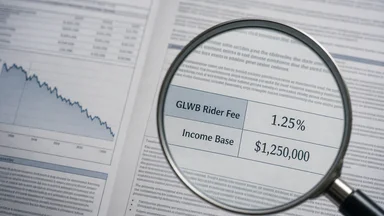
First, review your group disability policy's definition of disability. If it uses a lift test, ask your employer whether a rider is available that defines disability by your own occupation. Some insurers offer an "own occupation" rider for an additional premium, typically 10–15% of the base cost. It may be worth the money if you work in a white-collar job, but the availability and cost depend on your specific plan and insurer. Consult a benefits advisor to evaluate whether this option is right for you.
Second, document daily limitations with your physician. If you have a condition that affects your ability to work — even if you can still lift 50 pounds — ask your doctor to write a narrative describing the functional impairments: inability to concentrate for more than an hour, need to rest after two hours of standing, difficulty with memory or multitasking. This documentation may not override the lift test in the initial review, but it strengthens your appeal and your position if you need to litigate. Again, this is not a guaranteed solution, and outcomes depend on the specific policy and circumstances.
Third, if your claim is denied based on the lift test, challenge it with vocational evidence. Hire a vocational expert who can analyze your job's actual demands using O*NET or similar tools. Show that the lift test is irrelevant to your occupation. Some courts have accepted this argument in individual cases, especially when the plan language is ambiguous. The odds are not great, but they are better than accepting the denial without a fight. You can also contact your state insurance commissioner to apply pressure on the carrier, though ERISA preemption limits what states can do. As with all legal strategies, consult an attorney before proceeding.
Finally, consider asking your employer to file for a plan amendment. Employers have the power to change the plan document, and some have done so in response to employee complaints. It is a long shot, but if enough employees raise the issue, the employer may negotiate with the insurer for a better definition. The trust amendment case we covered shows that contract language can be changed when stakeholders push hard enough. The same principle applies here, but it requires collective action and employer cooperation.
The Cost of Waiting for Reform
Every year that passes without a regulatory update, thousands of workers fall through the cracks. The average disability claim delay under ERISA is 18 months, according to a 2024 study by the Rand Corporation. During that time, claimants lose an average of $44,000 in income. Many drain their retirement savings, take on credit card debt, or miss mortgage payments. The financial stress compounds the medical condition, making return to work even harder.
Bankruptcy is a real risk. A 2023 study in the American Journal of Public Health found that medical debt and income loss from disability are leading causes of personal bankruptcy. Claimants who are denied benefits are significantly more likely to file than those who receive them. The irony is that disability insurance is supposed to prevent this exact outcome. When the definition fails, the safety net fails.
Insurer stock prices, as noted, are unaffected. The market does not penalize companies for denying valid claims, because the market does not distinguish between valid and invalid claims — only between paid and unpaid. As long as the regulatory definition allows narrow interpretations, the profit incentive will push insurers to deny more claims. There is no countervailing force.
Only a legislative or regulatory fix can close the loophole. The Department of Labor could issue a new regulation clarifying that disability must be assessed based on an individual's ability to perform the material duties of their own occupation, taking into account cognitive and mental impairments. Congress could amend ERISA to require occupation-specific definitions. Either would be a relatively simple change with significant impact. But neither seems likely in the current political climate, where insurance reform is not a priority. Until then, the 50-pound lift test will continue to determine who gets benefits and who does not — a relic of 1984 that the 2020s have not bothered to retire. Reform is difficult, but not impossible. Workers who understand the problem can at least prepare for the fight ahead.
This article is for informational purposes only and does not constitute legal, medical, or financial advice. Consult a qualified professional for guidance specific to your situation.